[ad_1]
“], “filter”: { “nextExceptions”: “img, blockquote, div”, “nextContainsExceptions”: “img, blockquote, a.btn, a.o-button”} }”>
Get a free Giordana cycling jersey when you subscribe to Velo with Outside+! It’s our way of celebrating the 2024 Road World Championships in Zurich. Includes free shipping. Hurry, ends Sept. 29.
>”,”name”:”in-content-cta”,”type”:”link”}}”>Join now.
In a perfect world, professional cyclists would sign for a team and spend their entire career building special bonds and performing at their absolute best for that squad. But that is rarely the case.
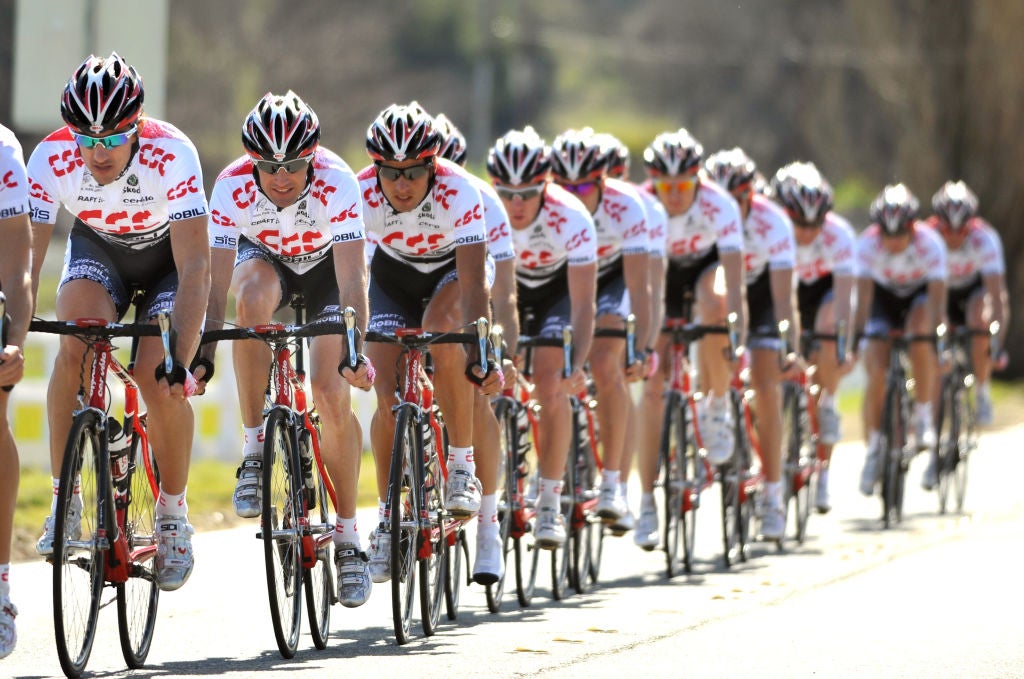
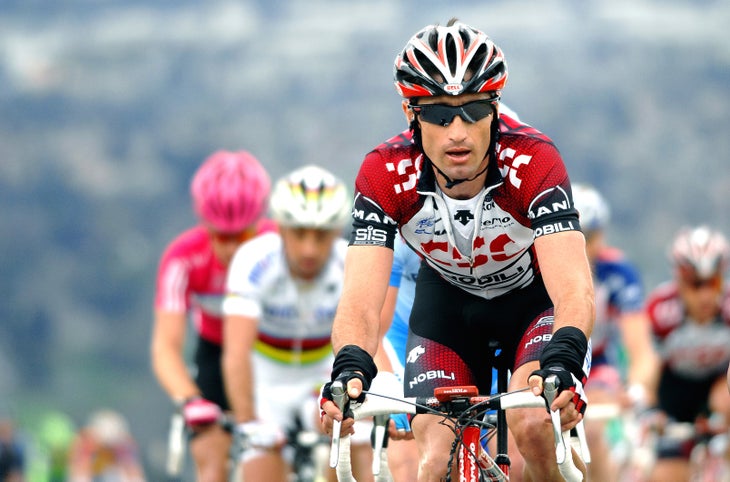
I rode for five different teams during my 16 years in the peloton: Motorola for two years, Cofidis for three years, Credit Agricole for two years, Team Telekom for two years, before finishing off with my longest stint of five years with Team CSC. During that time, I never signed a contract for longer than two years at a time.
With such short term security, it was a constant grind fighting for a new contract, one that could easily take much needed energy and focus away from riding your bike fast and winning races.
When you sign for a team, it is a big decision made with the input of family, trusted friends, and especially your agent. The decision shouldn’t be taken lightly as this will affect your career, self-esteem, confidence, and future earning potential.
There are a lot of things to consider when signing with a team such as development opportunities, teammates, goals, and salary, but open and honest communication may be the most important.
When I signed my first European contract with Motorola in 1995, I was thrilled just to ride for a big team. It was not at all about the money, but the opportunity to get to race the biggest races in the world alongside some of my idols.
After two years of racing for Motorola, the sponsor pulled out and we were all forced to look for new teams. It was a stressful period, but due to some good results at the end of the 1996 season I was able to secure a ride with Cofidis late in the year.
When starting off with a new team there are expectations from both sides. Sometimes it gels instantly, but often there is a hard adaptation period — especially if there is a language barrier.
Change is a scary thing for everyone and often hard to deal with in a new environment often accompanied by stress. No two teams are the same, so there must be an effort from both sides to work together.
With a team of 30 riders and close to, if not more than that number in staff members, there are a lot of personalities you must deal with, and politics come into play.
When joining a new team, you don’t want to start off on the wrong foot with teammates or staff and be pegged as “difficult to work with” or “special.” With so many different characters, personalities, cultural differences and nationalities involved, this is a mine field that you must learn to navigate as quickly as possible with open and honest communication and the ability to accept criticism from time to time.
Many teams have many different nationalities included in the staff and riders, but the overall team philosophy is centered around the country in which they are based. Teams all have their own protocols and procedures and all are quite different as many have had the same senior management for decades.
You must remember that cycling, like most sports, is a what have you done for me lately sport. If you do your job well and win races, everything seems to work out, but when you are performing poorly is when the whispers start and can really affect your morale and that of the team. Winning does cure a lot of things, but in a sport where you lose much more than you win, those precious wins can be challenging to come by.
When big riders change teams, they often bring a core group of teammates and staff that make their transition to a new team a bit easier. This group may contain a rider or two as well as a personal mechanic, soigneur, and possibly even a press officer.
Most of the time, new riders fit into the new team right away, but sometimes it just doesn’t work out the way that everyone had hoped for.
Due to the internet and so many riders sharing the same agents these days, everyone has a pretty good idea of what one another is getting paid, but this can lead to issues in the team bus. There is a lot of talking behind each other’s backs as, after all, this is a competitive sport and ultimately people are looking out for themselves.
When a well-paid rider joins the team and doesn’t perform up to expectations right away is where things can go terribly wrong for everyone involved. The whispers about he or she just doing it for a paycheck spread like wildfire. Everything that rider does is put under the microscope and the tension builds to a breaking point where a change of scenery is the only option.
After I retired from racing and took a job as a team coach and middle management, I was much more aware of what can make or break a successful transition to a new team.
Most professional cyclists are creatures of habit. They enjoy the structure of being a professional cyclist, but all in their own special way. They choose what works for them and the path of least resistance is the preferred one.
One thing to keep in mind when changing teams is everything could be completely different from what you are used to or promised.
Riders who have been on one team for a long time have probably used the same bike, groupset, saddle, cycling shoe, clothing brand, nutritional brand, and coach for years.
Some can transition seamlessly, but many compare their new set up to what they had in the past and use that as justification for poor performances or morale.
The single most common issue which causes riders to search out a new team is when the team manager or senior management call out a rider in the press instead of dealing with things internally. This can rip a team’s spirit apart very quickly and often the damage is irreparable.
When I joined CSC in 2004, I immediately knew that I finally found the team atmosphere that I had been dreaming of my entire career. I can’t put my finger on it exactly, but one thing is for sure: I was happy again and that made all the difference in the world. I had great teammates who are very close friends to this day, and I thank my lucky stars that I was able to experience a team like this before the end of my career.
I hope that every rider in the peloton can experience at one time or another what I did in with Team CSC!
[ad_2]
Source link